Not sure what to buy or plant this month? Seasonal vegetables are the crops that ripen near you at a given time of year, and a regional harvest calendar is the simplest guide to them.
| Item | Value |
|---|---|
| Average distance grocery-chain produce travels to your plate | 1,500 miles |
| Soil temperature for transplanting seedlings | around 45° F |
| Potatoes in storage (Kansas calendar) | through January |
| Beets in storage (Kansas calendar) | through January |
| Winter squash in storage (Kansas calendar) | through February |
These figures come from Kansas State University extension publications: the Simple Seasonal Meals fact sheet and the Kansas buying guide. They can change with region and season, so check the source before you rely on them.
What counts as seasonal vegetables?
A seasonal vegetable is one harvested when it naturally matures where you live. The Kansas buying guide says it is important to know what is likely to be available locally at a given time of year, taking local climate and conditions into account (K-State, December 2024).
The same guide calls its seasonality windows approximate. They may shift earlier or later with the weather, your location and the practices of local producers, and timing can differ by a few weeks even inside one state.
Other regions publish their own calendars. Utah State University Extension, for example, offers a harvest schedule for Southern Utah (cold) and advises you to chat with local farmers to learn when items will be ready that year.
Why eat with the seasons
The Kansas fact sheet says produce reaches its peak at a certain time, and that color, flavor, texture and nutritional value increase as it ripens. It adds that eating seasonally costs less during the normal growing seasons (K-State fact sheet).
The same publication contrasts this with produce from a grocery chain, which it says travels on average 1,500 miles from the farm to your plate. Its authors argue that, in most cases, the farther produce travels, the less nutritious and tasty it is when you eat it.
Practical reasons to follow the calendar include:
- Quality: you find crops at peak flavor and texture.
- Budget: the buying guide says knowing what is in season helps you manage your grocery budget.
- Planning: the same guide says it helps you plan meals around what is available.
- Variety: the fact sheet notes that eating seasonally and locally broadens the foods in your diet.
The fact sheet also recalls the Choose MyPlate message that half of your plate should be filled with fruits and vegetables.
Seasonal vegetables through the year
The Kansas calendar gives an average range for each crop, and the groupings below follow its broad pattern. Your own region may be earlier or later, so treat them as a starting point (K-State buying guide).
Spring
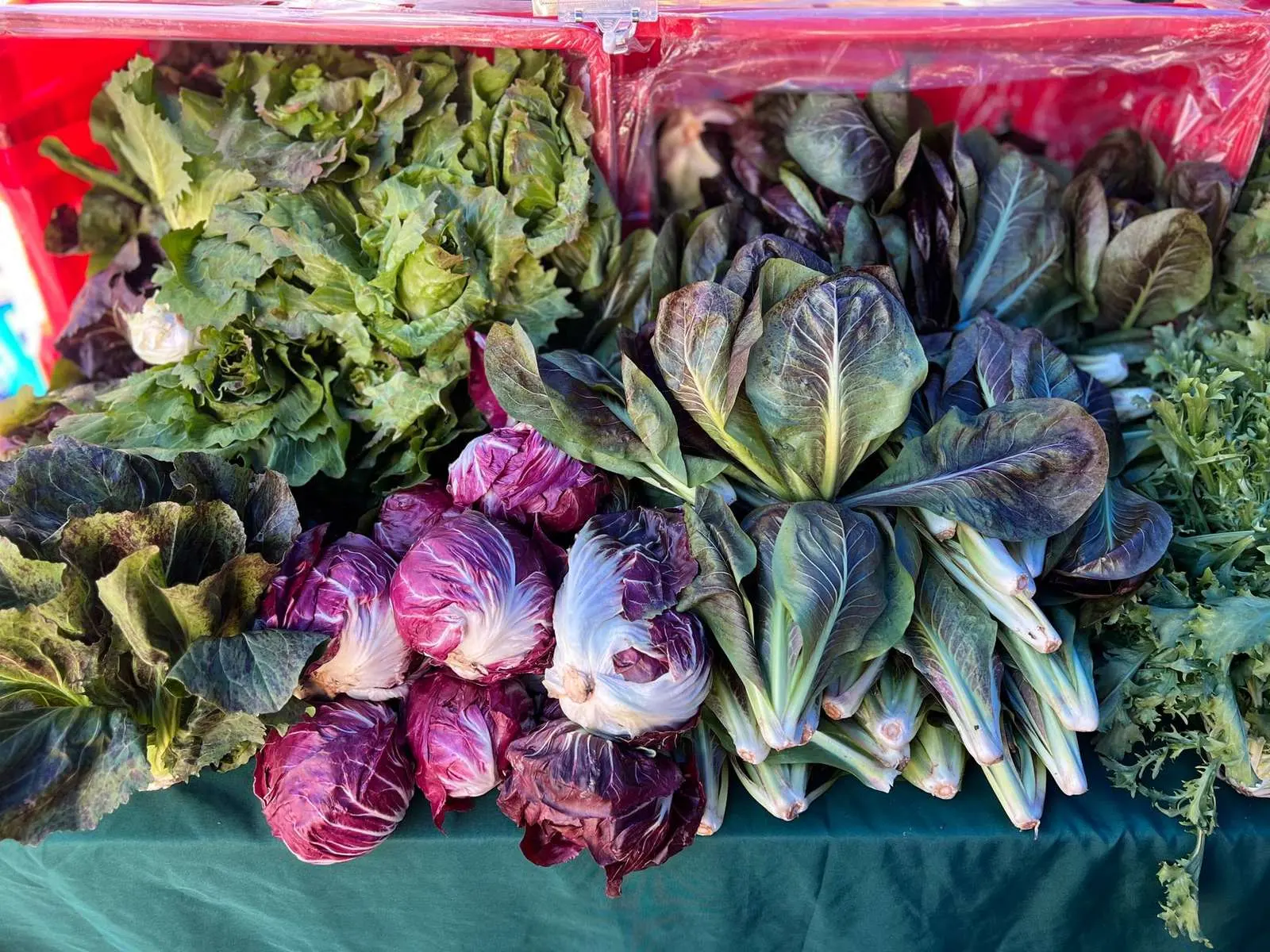
In Kansas, asparagus and a variety of salad greens are the first produce available, according to the K-State fact sheet. The calendar also lists spinach, radish, kohlrabi, bok choy and lettuce among its crops. For a fuller picture, see the spring vegetables list.
Summer
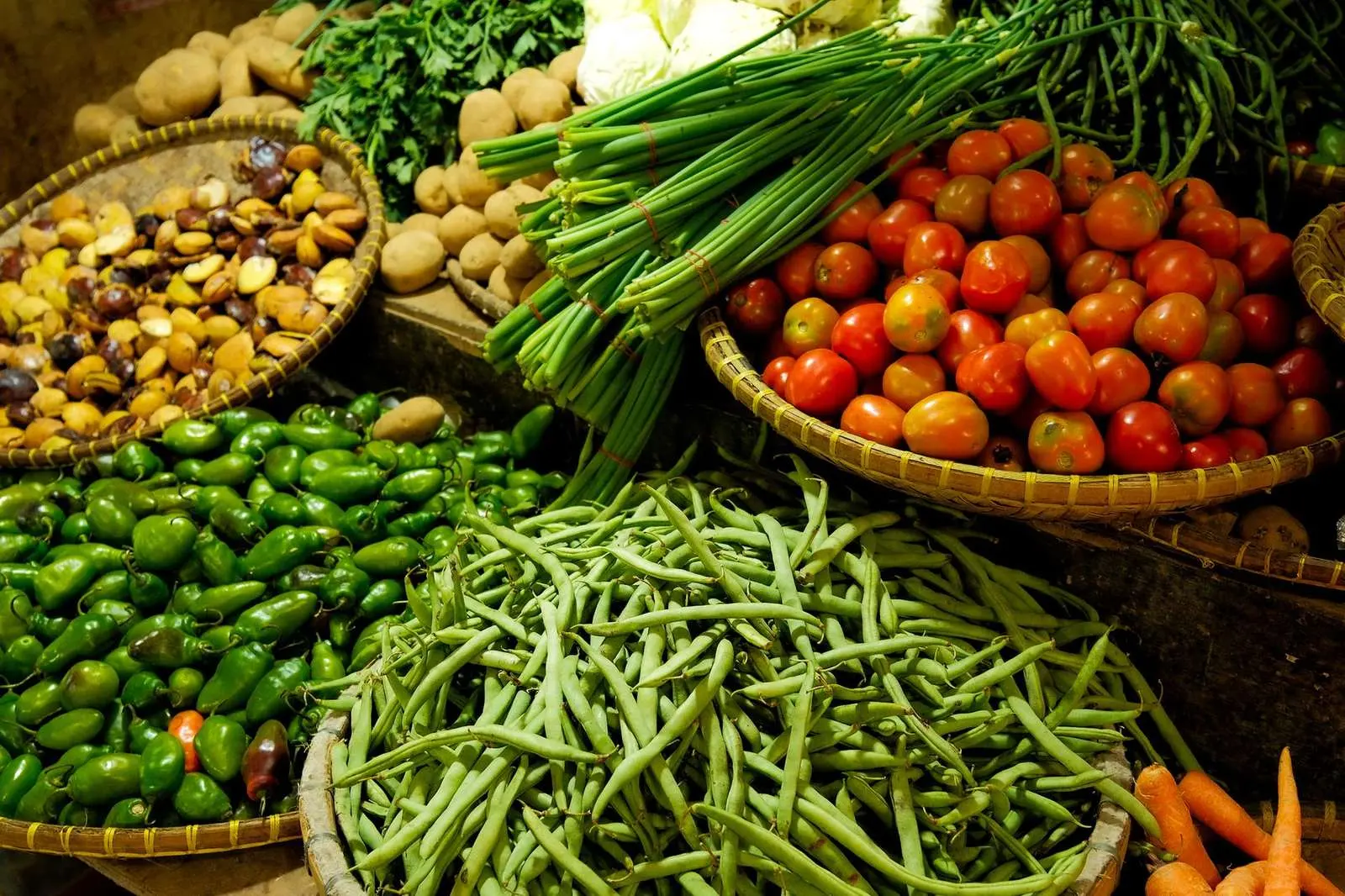
The warm months bring the crops most gardeners picture first: tomatoes, peppers, cucumbers, eggplant, green beans, sweet corn and summer squash all appear in the Kansas calendar. Okra and melons are listed too. A summer vegetables list is the place to compare them: read the summer vegetables list for the details.
Autumn
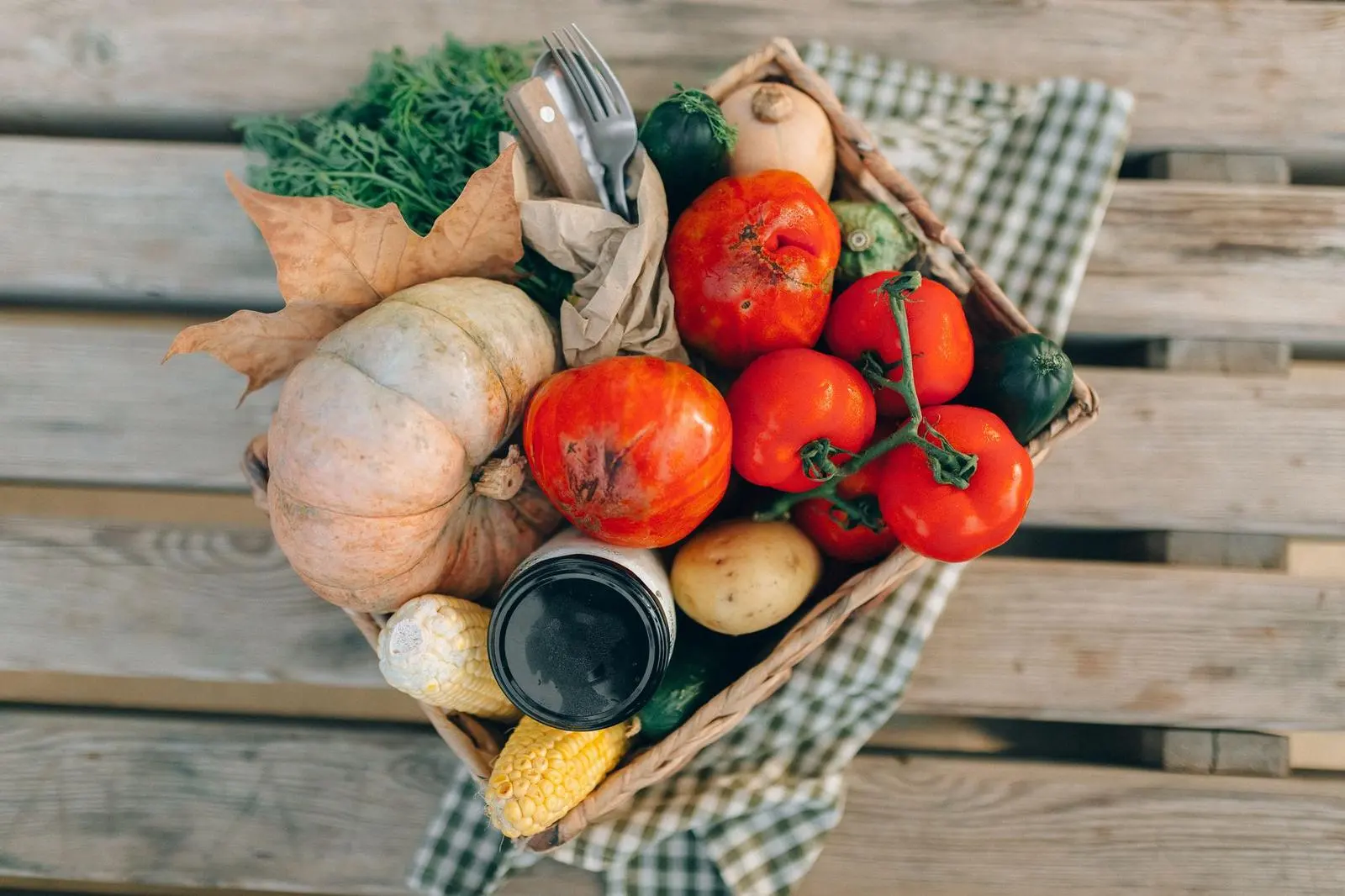
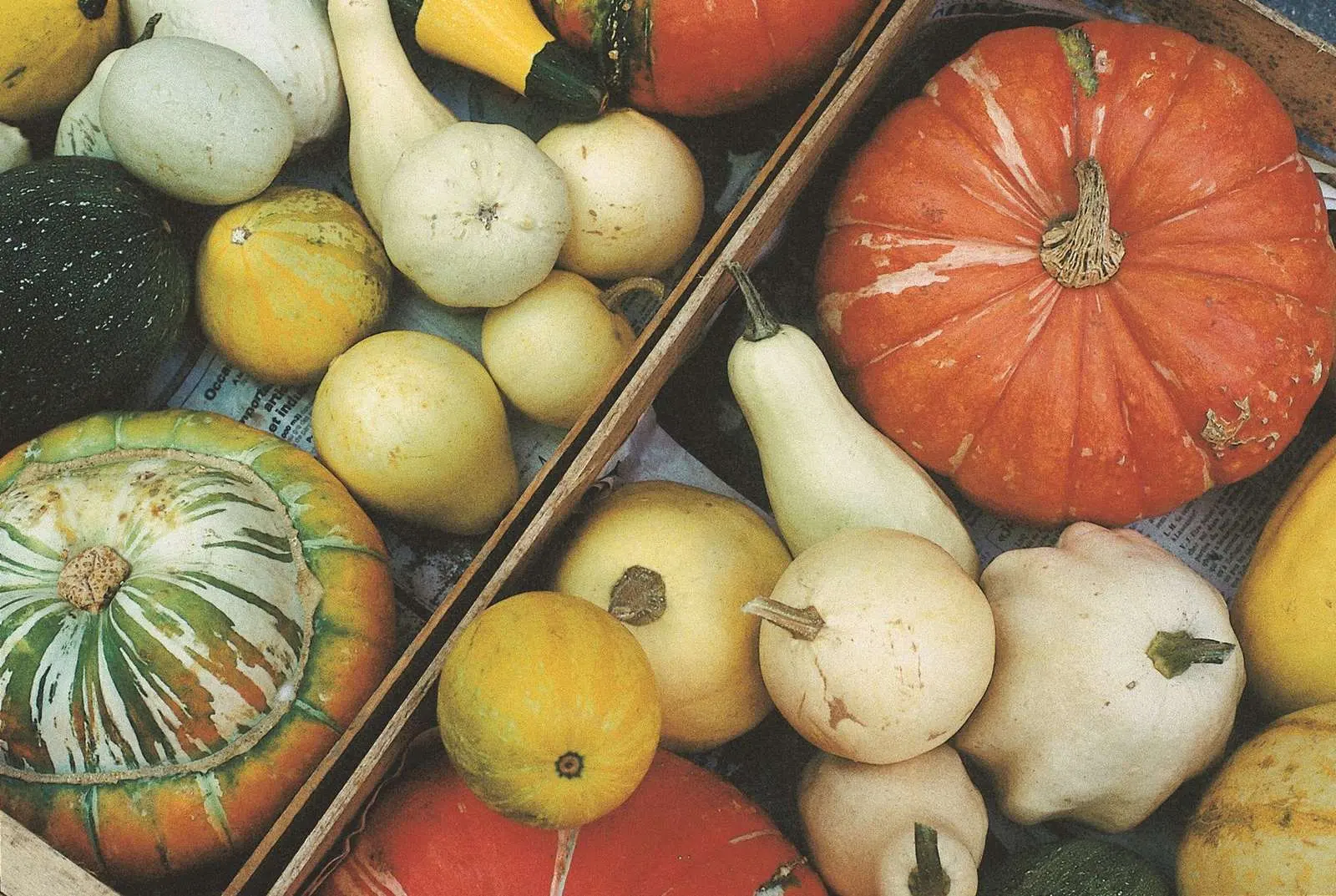
Pumpkins and winter squash sit in the same calendar, along with cabbage, broccoli, cauliflower, Brussels sprouts and kale. Squash is a large family, so the guide to types of squash helps you tell the varieties apart. The autumn vegetables list covers the wider harvest.
Winter
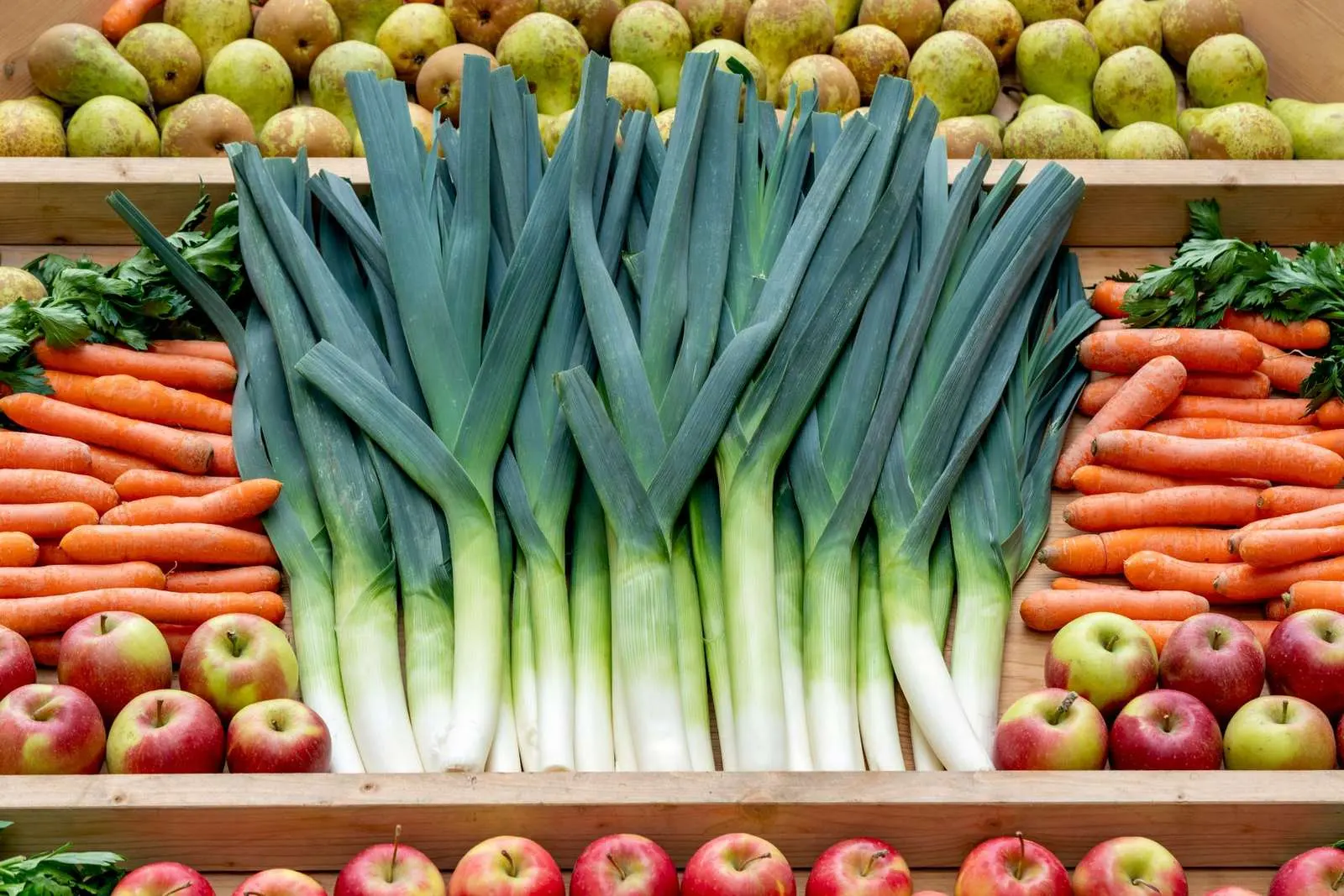
Fresh growth slows, so winter eating leans on storage crops. The calendar marks storage windows for apples, beets, carrots, parsnip, potatoes, rutabaga, sweet potatoes, turnip and winter squash, and says garlic keeps through winter. Browse the winter vegetables list for ideas.
How growers stretch the seasons
The calendar is not a hard wall. The Kansas guide notes that farmers use a range of techniques to supply produce earlier or later than you might expect from your own garden.
- New cultivars.
- Succession planting.
- Row covers.
- High tunnels.
Some growers also use greenhouses with hydroponics or other technologies that make produce available for much of the year (K-State buying guide). The guide adds that certain crops may be poorly adapted to your location and not available at all.
Ask the person selling to you how a crop was grown. A tomato outside its usual window may come from a heated or covered system, which is a fair answer rather than a problem, and it tells you how to read the label.
Growing your own seasonal vegetables
The Kansas fact sheet puts it simply: nothing is more in season than the produce you grow, and you do not need a lot of space or a green thumb. It says planting generally begins around the middle of March and can continue throughout the growing season, depending on your climate (K-State fact sheet).
For beginners, it suggests starting with seedlings of peppers, tomatoes or cucumbers. Transplant them when soil temperatures reach around 45° F and the chance of frost is reduced, noting that exact temperatures differ between cool-season and warm-season vegetables.
Short on space? The same source suggests basil, mint or parsley in pots on a patio or in a bright kitchen window. It also says children are more likely to try foods they helped grow.
Once a first season goes well, you can plan further ahead. Leeks suit patient gardeners, and the page on how to grow leeks walks through them. For cold-season beds, winter vegetable garden what to plant helps you choose crops.
Buying, storing and preserving the harvest
If you do not garden, the buying guide lists farmers markets, roadside or farm stands, you-pick operations and community supported agriculture programs as sources of seasonal produce. The fact sheet says a CSA gives you an allotment of the farm’s bounty, with no guarantee of exactly what you will get each week, because pests and weather influence what grows (K-State fact sheet).
A simple way to start:
- Find a harvest calendar written for your region.
- Visit a local market and choose one crop you have not tried.
- Cook it simply, then add a second crop the following week.
- Preserve any surplus using up-to-date methods.
Storage windows matter once the weather turns. The Kansas calendar shows these, among others:
- Apples: storage through February.
- Carrots: storage through February.
- Beets: storage through January.
- Potatoes: storage through January.
- Garlic: storage through winter.
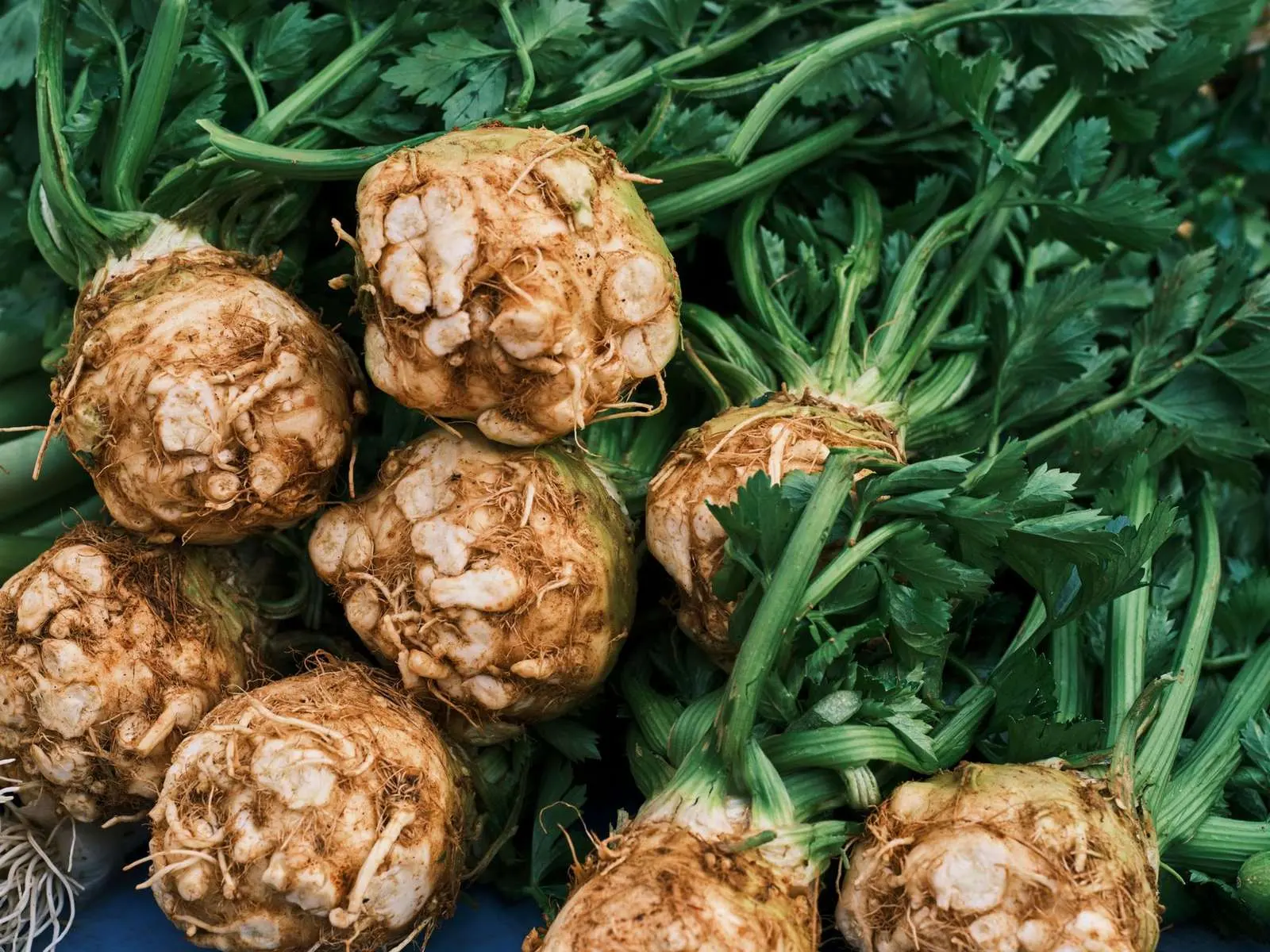
Source for the list: the K-State buying guide. Keeping them in good condition is the subject of how to store root vegetables, and if a knobbly root at the market puzzles you, read what is celeriac.
The fact sheet recommends canning, freezing or drying to preserve a harvest, following up-to-date practices, and points to the So Easy to Preserve guide from University of Georgia Extension. For ideas on turning the produce into meals, see seasonal cooking.
Frequently asked questions
Are seasonal vegetables cheaper?
Show answer
The Kansas extension author links lower prices to buying within the normal growing season. Preserving a surplus can also spare you from buying the same crop later, when it is dearer and harder to find.
Can I use a calendar from another region?
Show answer
Only as a rough guide. Climate differs from place to place, and the Kansas guide says some crops are not well adapted to every location, so a local calendar or a conversation with a nearby grower is better.
What do I eat in the coldest months?
Show answer
Lean on crops that keep, such as potatoes, beets, carrots, parsnips and winter squash, plus anything you preserved. Some areas also have winter markets supplied from hoop houses.
Do I need a big garden to eat seasonally?
Show answer
No. A few pots of herbs or a handful of seedlings is enough to begin, and a market stall or CSA share can fill the gaps.