Worried your squash harvest will rot before winter ends? Here is how to store winter squash: cure it if the type allows, then keep it cool, dry and ventilated at 50 to 55°F.
Storage life depends heavily on the variety, so the overview of types of squash is a useful companion to this guide.
| Item | Value |
|---|---|
| Recommended storage temperature | 50 to 55°F |
| Lowest storage temperature | not below 50°F |
| Curing temperature (not for acorn types) | 80 to 85°F |
| Acorn squash storage life | 5 to 8 weeks |
| Butternut squash storage life | 2 to 3 months |
| Hubbard squash storage life | 5 to 6 months |
These figures come from Iowa State Extension and Oregon State Extension. Extension advice differs a little between services and can change, so check the source before you rely on them.
Harvest squash at the right moment
Good storage starts in the garden. Iowa State Extension describes a mature fruit as one with a hard skin that a thumbnail cannot puncture, and Oregon State Extension gives a similar test: the rind resists scratching with a fingernail.
Fruit picked too early is a poor candidate for winter. The University of Kentucky’s Center for Crop Diversification notes that immature squash does not store well and is more susceptible to decay.
Do not wait too long either. Oregon State Extension says to bring the harvest in when temperatures dip below 50°F for more than a week or when rain becomes frequent, as described on its harvest and storage page.
How you cut the fruit matters, and the stem advice is not identical everywhere:
- Use pruners or a sharp knife rather than pulling the fruit off the vine.
- Iowa State Extension says to leave a 1 inch stem on each fruit (source).
- Oregon State Extension says to leave 2 to 4 inches of stem (source).
- Hubbard-type squash is the exception in the Oregon guidance: it stores best with the stem removed completely.
Treat every fruit gently. Both extension services link cuts and bruises to rot, and Oregon State Extension adds that you should not drop fruit or stack it in piles, and should use any damaged squash promptly (source).
Curing: when to do it and when to skip it
Curing hardens the skin and heals small cuts and scratches. Iowa State Extension gives 80 to 85°F and 80 to 85 percent relative humidity for most winter squash, and the detailed steps are in the guide on how to cure winter squash.
The Kentucky guide puts the time at 5-7 days indoors. It adds that squash can be sun-cured in the field only when there is no chance of precipitation (source).
Acorn types are the exception, because the warmth and humidity of curing cut into their quality and storage life, according to Iowa State Extension.
Where to keep winter squash for the cold months
The target is a cool, dry, well-ventilated spot. Iowa State Extension recommends 50 to 55°F, while the Kentucky guide suggests 55-60°F with 60% relative humidity, so a small spread is normal (Kentucky source).
Warmth is not the main risk here. Oregon State Extension says not to let temperatures fall below 50°F, and a cold garden shed can undo a good harvest (source).
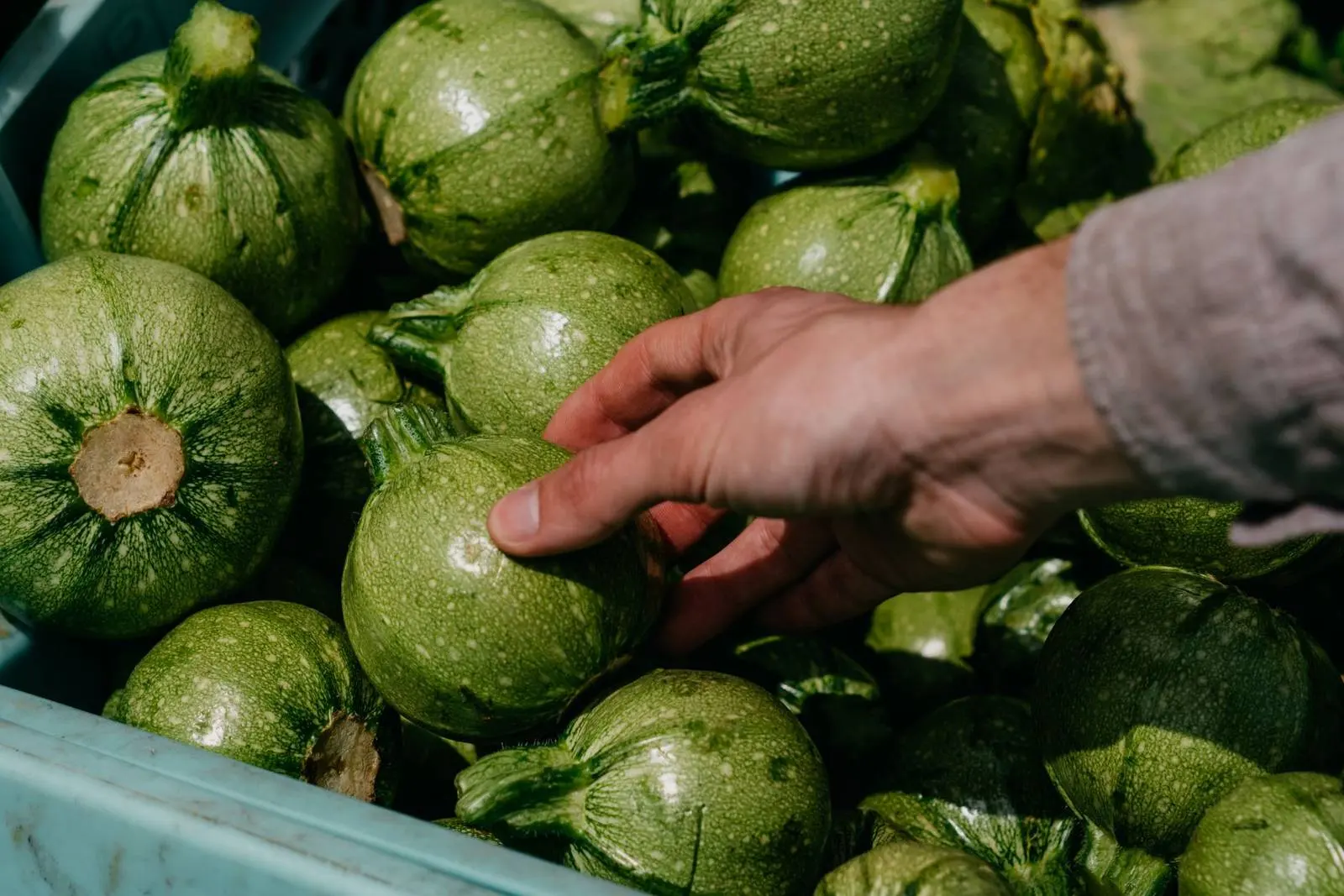
Several household spaces can meet these conditions:
- A garage, where shelves keep the fruit off the floor.
- Basement areas, or semi-heated spaces such as a spare bedroom, as suggested by University of Maine Extension.
- A layer of straw under the fruit to help keep it dry, a tip from Oregon State Extension.
Keep the squash shelf away from the fruit bowl and the apple crate. Oregon State Extension notes that ripening apples and pears give off ethylene gas, which speeds up spoilage (source).
How long does each type keep?
Keeping time varies widely, and the extension figures overlap but are not identical. The Kentucky guide sums it up as 2 to 6 months for properly cured, cooled and stored squash, depending on the cultivar.
- Acorn: about 5 to 8 weeks per Iowa State Extension, or 1 to 2 months per Oregon State Extension.
- Butternut: about 2 to 3 months in both of those sources, and Oregon State gives the same range for pumpkins.
- Hubbard: about 5 to 6 months per Iowa State Extension. Oregon State says turban, hubbard and Sweet Meat squash may last up to 6 months.
- Buttercup and Hubbard: University of Maine Extension lists them among the best keepers at 3 – 6 months (source).
If you are unsure which of your fruit count as squash and which as pumpkins, the guide on squash vs pumpkin explains the difference in naming.
Checking on stored squash through winter
Look over the stash once a week. Oregon State Extension says to remove any fruit that is softening or showing rot so it does not affect its neighbours (source).
University of Maine Extension recommends discarding or composting squash that shows signs of decay without delay (source). Since acorn squash has the shortest storage life in the figures above, it makes sense to cook it first and leave the long keepers for late winter.
Frequently asked questions
Should I cure acorn squash?
Show answer
No. Iowa State Extension advises skipping the curing stage for acorn types and moving them directly into storage.
What happens if squash gets too cold?
Show answer
Chilling injury is the risk. The Kentucky guide says to avoid it by never storing squash below 50°F.
Can I store squash next to apples?
Show answer
It is better not to. Iowa State Extension explains that ethylene from ripening fruit shortens how long squash lasts.
Are paper bags or cardboard boxes a good idea?
Show answer
The advice splits. University of Maine Extension suggests brown paper bags or cardboard boxes to control humidity, while Oregon State Extension warns that newspaper and paper bags hold too much moisture and can encourage rot. If you use either, check the fruit often.