Worried your butternut squash won’t ripen before frost? Here is how to grow butternut squash: sow into warm soil in full sun, water deeply, and harvest once the rind resists a fingernail.
Butternut is one winter squash among many, and the guide to types of squash shows how it compares with the others.
| Item | Value |
|---|---|
| Soil temperature at sowing | Above 62 degrees F |
| Seed depth | 1-2 inches |
| Mound spacing | 4 feet apart |
| Time from flowering to maturity | 45-55 days |
| Watering | 1-2 inches per week |
| Storage temperature | 50-55°F |
The figures above come from University of Arkansas Extension and Utah State University Extension. Guidance can change and local conditions differ, so check the source before you rely on them.
Choose a butternut that suits your space
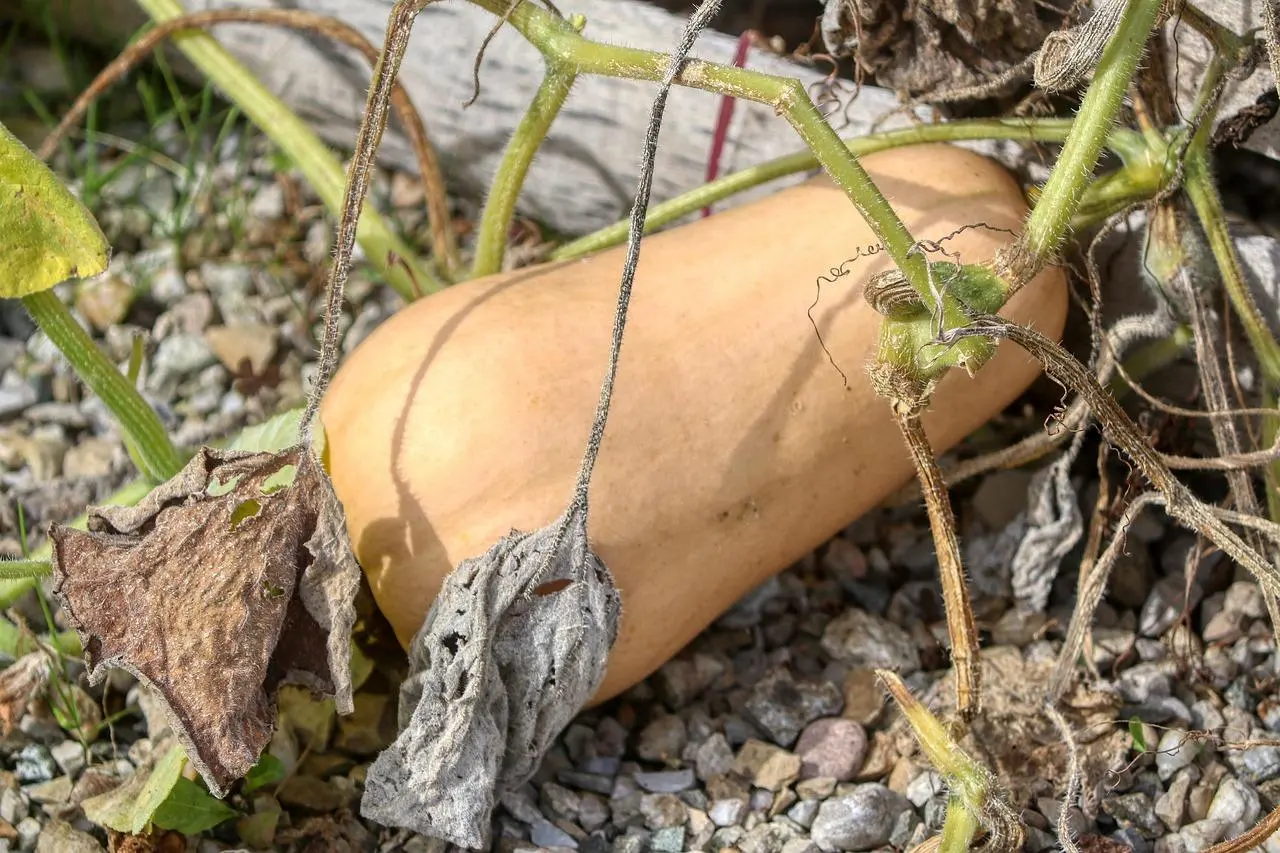
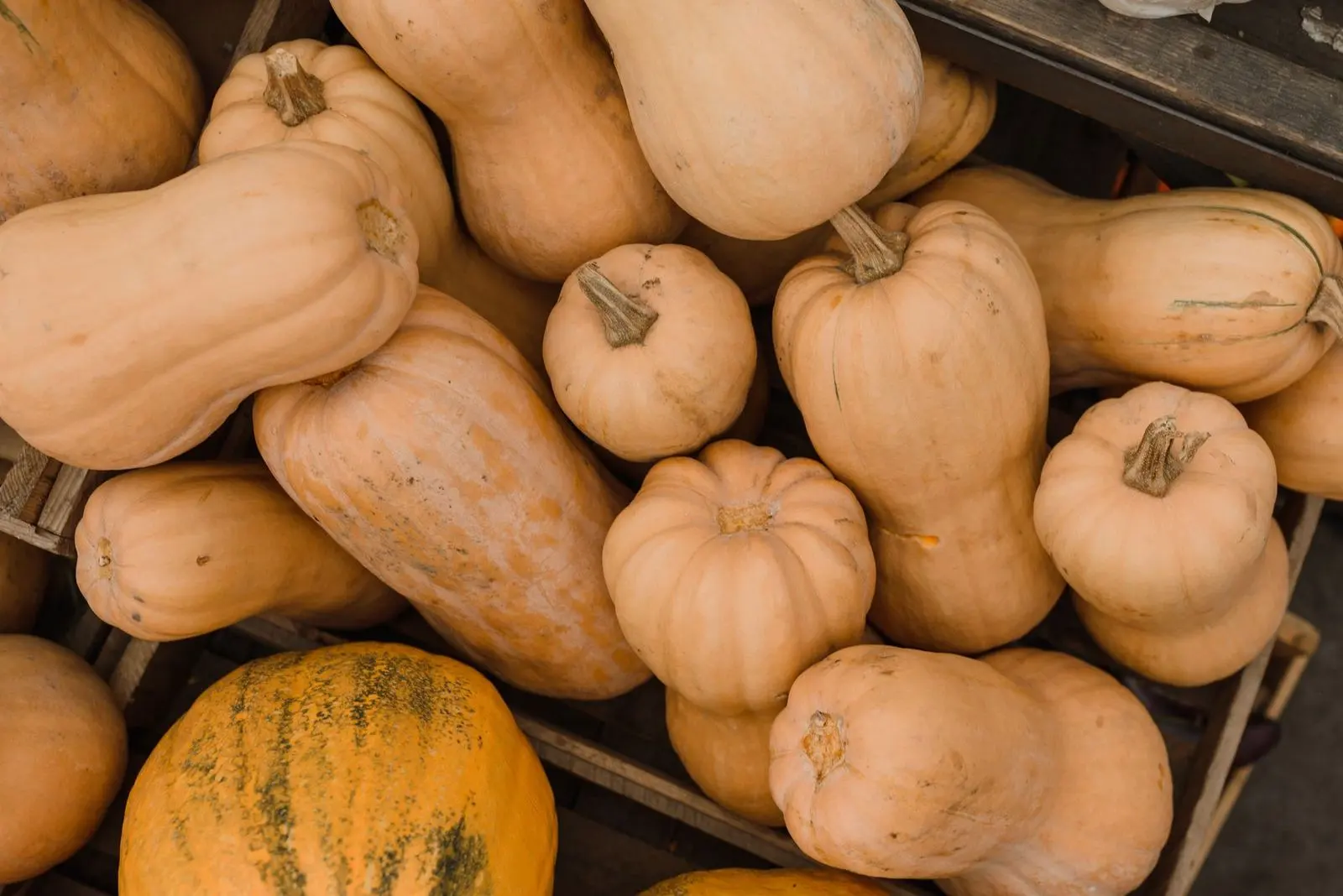
Butternut is a winter squash, and WVU Extension says winter squashes should be allowed to ripen and harden on the vine so they can be stored into the fall and winter. University of Kentucky Extension describes butternut as a medium-sized squash of three to five pounds, with yellow-tan skin and orangey flesh. It adds that the flavour is sweet and nutty, with a long body.
There is no shortage of varieties: Utah State University Extension notes that numerous butternut types are sold at local gardening outlets and through seed catalogs. University of Kentucky Extension names Early Butternut and Honeynut as good options to plant.
Space is the other deciding factor. The same Kentucky guide warns that winter squash can take a lot of space to grow, so it recommends compact bush varieties if your garden is small. If you also like a rounder winter squash, the profile of red kuri squash is a useful point of comparison.
Prepare a sunny, well-drained bed
Pick a spot with full sun: Utah State University Extension advises choosing a site that receives full sun, and says all squash prefer organic, rich, well-drained, sandy soils for best growth. Heavy, waterlogged ground is the one thing to avoid.
Before sowing, work in compost. The Utah State University Extension guide suggests incorporating up to 2 inches of compost into the planting area, and University of Arkansas Extension says to adjust soil pH as indicated by a soil test. If the test calls for raising pH, the Arkansas guide says to apply agricultural limestone two to four months before planting.
Sow butternut seeds into warm soil
Squash is a warm-season crop, and University of Arkansas Extension states that warm soil is necessary for germination of seed and proper growth. It recommends sowing directly into the garden once frost danger has passed and the soil has warmed above 62 degrees F. Utah State University Extension uses 65°F as its benchmark, which is a reasonable margin if your spring is unsettled.
Follow these steps once the soil is ready:
- Sow seeds 1-2 inches deep in mounds 4 feet apart, as Utah State University Extension advises.
- Thin each mound after emergence to two plants, following the same Utah guide.
- Give long-vined types extra room: WVU Extension puts mounds approximately 4 to 6 feet apart.
- Expect seedlings fast, since the WVU guide says seeds usually sprout in about a week.
Transplants are an alternative. WVU Extension says to make sure they have a well-developed root system and are healthy, and Utah’s guide warns that damaging the roots at planting slows establishment and growth.
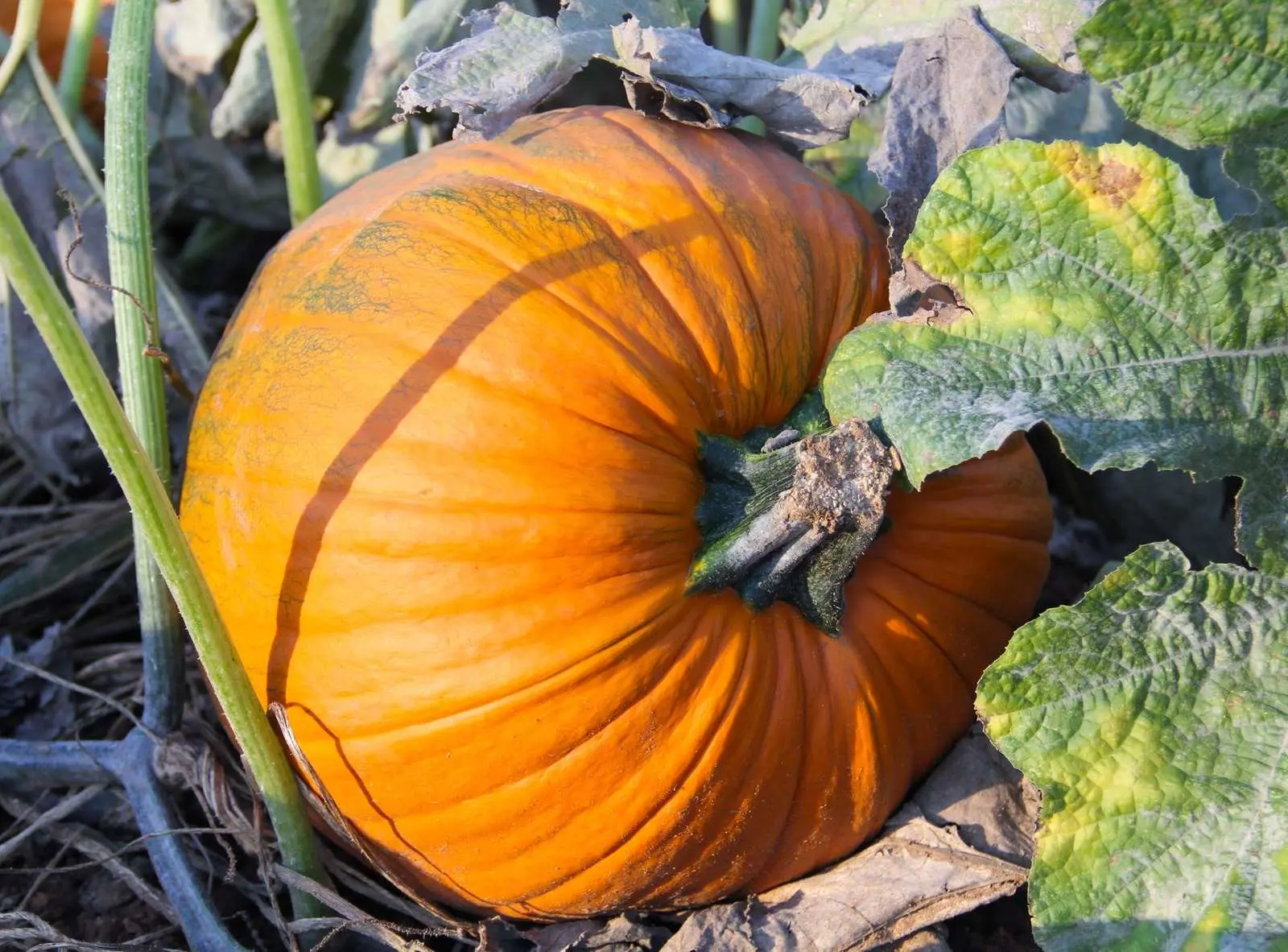
Pumpkins are winter squash too, according to University of Kentucky Extension, so the guide on how to grow pumpkins shares many of the same steps.
Water, feed and pollinate
Aim for deep, infrequent watering. Utah State University Extension recommends 1-2 inches per week, drip irrigation if possible, and smaller amounts as the fruits ripen to avoid fruit rots. WVU Extension adds that wetting the top of the plant and leaves can increase the chance of disease.
For feeding, the Utah guide says that after the vines develop runners, you should side dress each plant with 3-4 tablespoons of a nitrogen fertilizer. Sprinkle it around the plant and water it in.
Fruit only forms after pollination. WVU Extension explains that each plant bears both male and female flowers, and pollen must be carried between them, usually by insects. University of Arkansas Extension says female flowers have an undeveloped fruit at the base, and that insecticides should be used late in the afternoon or in the evening to prevent killing bees.
Pests and diseases to watch for
Butternut has one built-in advantage: University of Arkansas Extension states that butternut squash is resistant to squash vine borers. Other problems still appear, so check plants regularly.
- Cucumber beetles: University of Kentucky Extension says a fine mesh covering over young plants may keep them out. Overwintering beetles carry bacterial wilt and spread it when they feed, according to University of Arkansas Extension.
- Squash bugs: the Kentucky guide says to watch for clusters of small, shiny, bronze eggs under leaves starting in June or July. You can remove them with your fingers or even with duct tape.
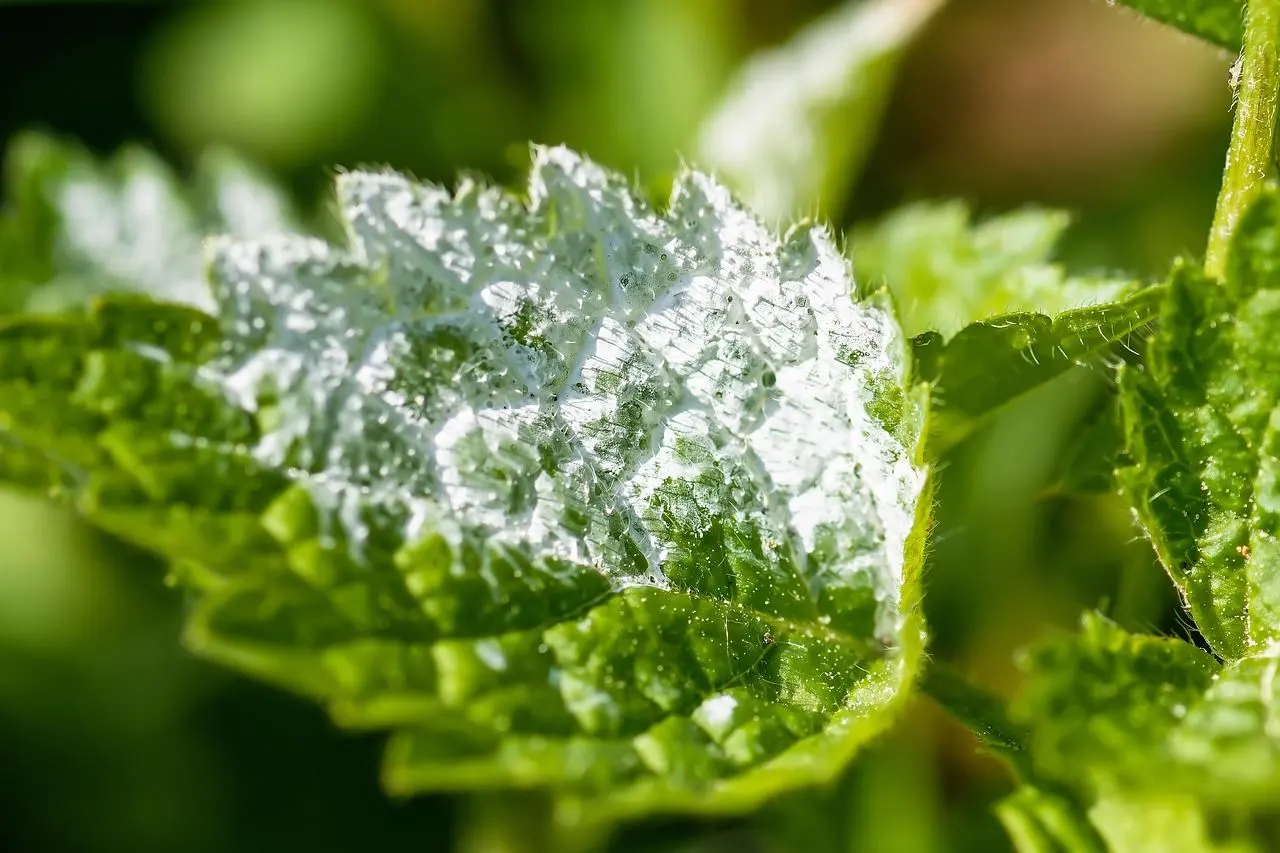
- Powdery mildew: the Arkansas guide describes a fungus that attacks the foliage during cool, damp periods.
- Belly rot: the same guide calls it a soilborne fungal disease that attacks developing fruit, and says to use mulches to prevent fruit contact with the soil.
One habit helps with most diseases. University of Arkansas Extension says not to handle, harvest or work in the leaves and vines when they are wet, to avoid spreading disease.
Harvest, cure and store
Allow time for maturity. Utah State University Extension says winter squash take 45-55 days to mature from flowering. Fruits are ready when they are fully colored, the vines begin to die back, and the rind is hard and impervious to scratching from a fingernail.
Try the fingernail test: University of Kentucky Extension says that when pressed in, your fingernail should leave a dent, not a cut. WVU Extension says to leave about 2 inches of stem on the fruit and to pick fruit without soft spots or discoloration. University of Arkansas Extension advises harvesting all mature fruits before a hard frost.
Sources disagree on curing. WVU Extension says acorn and butternut squashes do not need to be cured before storage, while University of Kentucky Extension says to put winter squash in a shaded, dry place for several weeks to cure. If you do cure, the WVU guide gives a room between 70 and 75 F for about 20 days.
For storage, these points come from the extension guides:
- Keep fruit with the stem attached in cool, dry conditions at 50-55°F, according to Utah State University Extension.
- Check fruits monthly for softening and rots, and note that buttercup and banana squash store longer than butternut and acorn (same Utah guide).
- Avoid storing squash with apples, which WVU Extension says can reduce storage life.
- Cured winter squash can be kept in a cool place for up to six months, says University of Kentucky Extension.
Frequently asked questions
How many butternut plants should I grow?
Show answer
For winter squash in general, University of Kentucky Extension estimates about 10 pounds of fruit from 10 row feet. It suggests two to three plants for one person or a family eating fresh squash, and more if you want to store fruit for winter.
Can butternut grow on a trellis?
Show answer
Vining winter squash can be trained around corn stalks or over a strong trellis or cattle panel arch to save space, as University of Kentucky Extension notes. WVU Extension cautions that varieties suited to containers or trellises tend to have smaller fruits that need support.
Why do my squash flowers drop without setting fruit?
Show answer
Early drop is often normal: WVU Extension says male flowers can appear a week or so ahead of females and may fall off. Female flowers that go unpollinated drop too, and you can help by moving pollen from a male flower to the stigma of a female flower with a cotton swab.
Can I sow earlier under plastic or row covers?
Show answer
Yes, with care. Utah State University Extension says seeds or plants can go out 2-3 weeks before the last frost when plastic mulches and row covers are used, and covers must come off once plants start to flower. The same guide says to wait until soils are warmer than 75°F before laying organic mulches, and WVU Extension says black plastic should be avoided in hotter climates.