Found white dust on your squash leaves and wondering what went wrong? Powdery mildew on squash is a common fungal disease, and you can slow it by spotting it early, spacing plants well and treating at the first white spots.
Powdery mildew is one of several problems across the squash family, and the guide to types of squash shows how varied the plants you may be growing are.
| Item | Value |
|---|---|
| Temperature range the disease prefers | 68-80°F |
| Humidity the disease prefers | 50-90% |
| Scouting frequency from late spring | Once per week |
| Sulfur spray interval after the first spots | Every 7-10 days |
| Highest temperature for sulfur sprays | Not above 90 °F |
These figures come from the Utah State University Extension vegetable guide and the NC State Extension fact sheet. Guidance can change, so check the source before you rely on them.
Recognising powdery mildew on squash leaves
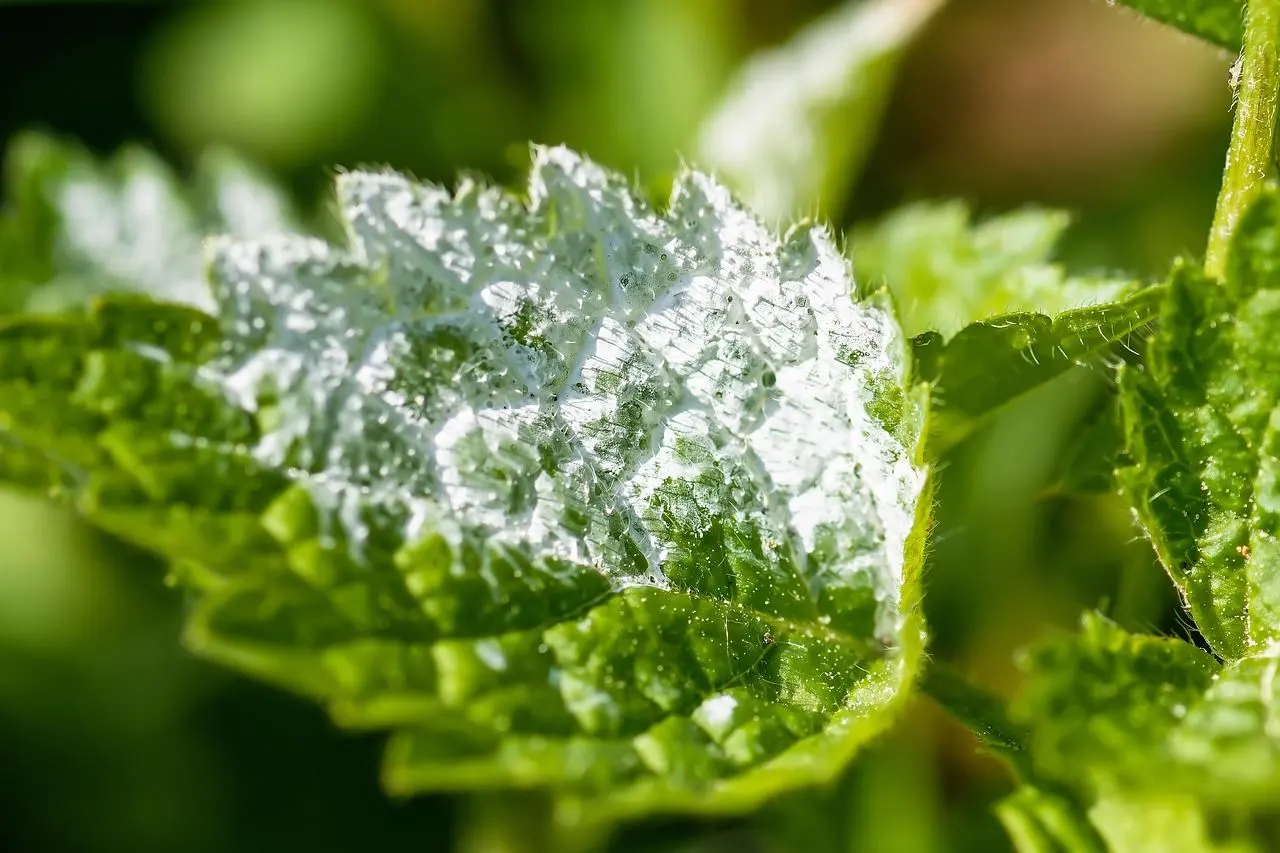
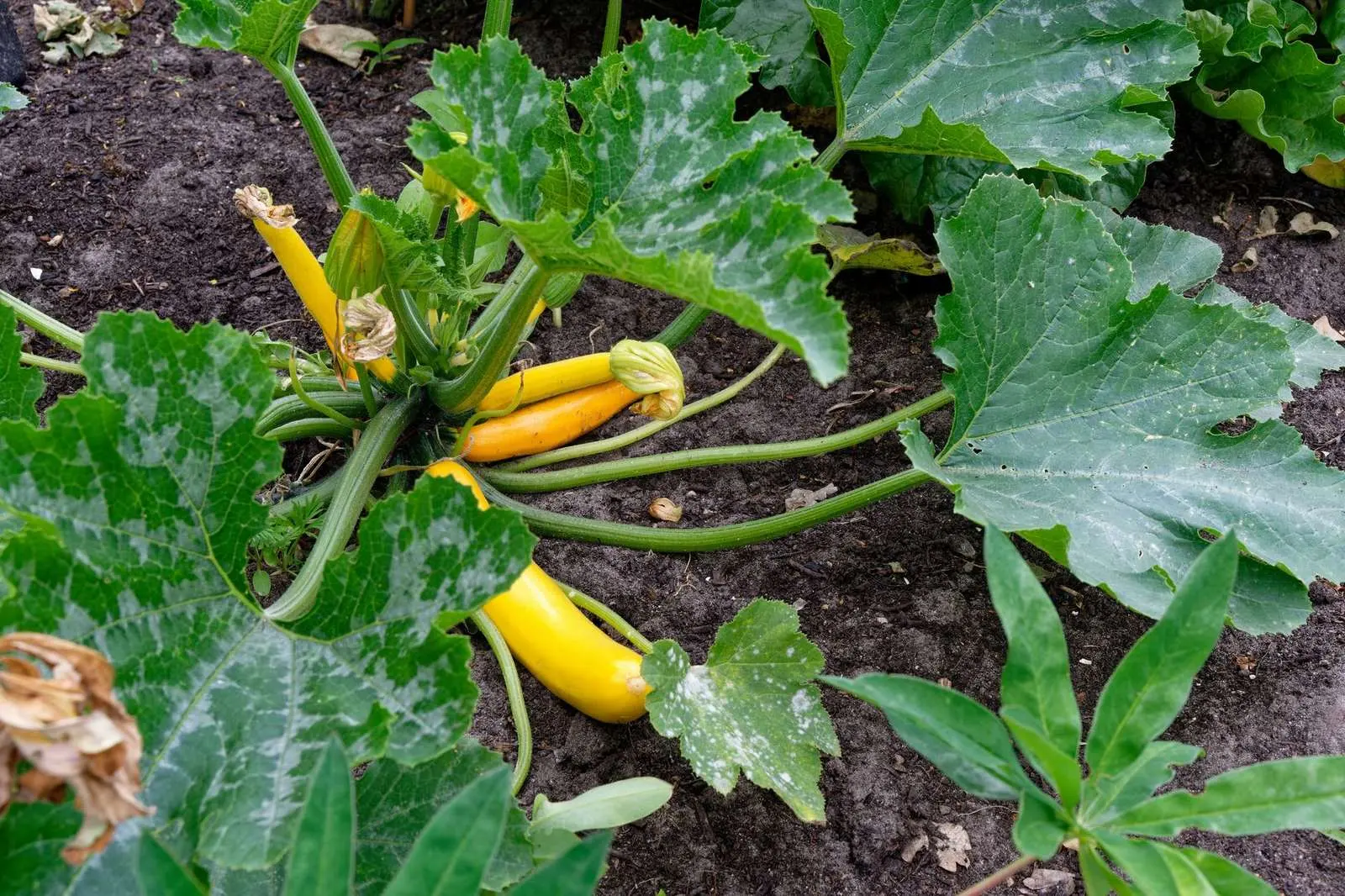
The first sign is white powdery spots on the leaf surface, as described in the Utah State University vegetable guide. Over time the entire leaf can be covered, and the “powder” is the fungal mycelium and spores.
Infection usually begins on older or shaded leaves, and the white growth can also appear on stems and petioles, according to NC State Extension. Within 7 to 10 days of the first infection, the white mix of mycelium and spores becomes visible, says the USU Extension plant health fact sheet.
Two fungi can cause the disease on cucurbits, as listed by the USU vegetable guide:
- Podosphaera xanthii
- Golovinomyces chicoracearum
The same guide notes that P. xanthii is the most common of the two in Utah.
Conditions that bring it on
NC State Extension says the disease prefers moderate temperatures of 68-80°F, humidity between 50-90%, dense foliage and low light. Infections can occur in drier air too, with relative humidity as low as 50%, according to the NC State fact sheet.
Rain is not the trigger. The USU vegetable guide notes that, in contrast to many fungi, powdery mildew does not thrive with rainfall, and that infection needs 2 or more hours of high humidity or dew on the leaves.
The fungus survives winter as fruiting structures on plant debris, then spores blow onto leaves when temperatures warm in late spring, per the same USU guide. Infected tissue makes more spores, and wind carries them to plants in new locations.
What the fungus does to your plants
Powdery mildew does more than spoil the look of the foliage. Utah State’s plant health fact sheet explains that it reduces photosynthesis, which lowers fruit yield and, through reduced sugar levels, fruit quality.
Cornell’s management paper adds that affected leaves die prematurely, which means fewer fruit, or fruit prone to sunscald, poor flavor and poor storability. The USU fact sheet adds that smaller fruits are exposed to sunscald when the canopy thins.
Squash is not the only target: all cucurbits can be affected, though cucumbers and melons are less susceptible because host resistance has been built into most commercial cultivars, says NC State. If you are unsure which group your plant belongs to, the comparison of summer squash vs winter squash explains the difference.
How to prevent powdery mildew on squash
Prevention beats rescue, and the habits below come from the USU Extension guide and the Cornell paper. They work best in combination.
- Choose resistant varieties.
- Give plants room so air can move through the canopy.
- Keep newer plantings away from older ones, or upwind of them.
- Scout the leaves weekly from late spring.
- Clear infected plant material after harvest.
Several resistant varieties are available for squash, cucumber and pumpkin, according to the USU vegetable guide. Cornell describes squash and pumpkin resistance as moderate and suggests picking varieties with resistance from both parents (homozygous) when possible, in its management paper.
Resistance is not a guarantee. P. xanthii has several races, and a variety labeled resistant may not cover all of them, notes USU Extension.
Wider spacing improves air movement, which reduces humidity in the canopy and can lower severity, as the USU guide explains. Cornell recommends that successive plantings be physically separated or at least planted upwind of older ones, because older plants can be a source of spores.
Weekly scouting should include the undersides of leaves. USU’s guide recommends checking once per week from late spring.
After harvest, remove or plow under infected plant material so the fungus cannot overwinter, advises the USU guide. Keep it out of the compost heap, because compost pile temperatures are not high enough to kill the pathogen, per USU’s fact sheet.
Once the bed is cleared and the last fruit is in the kitchen, the guide on how to cook spaghetti squash covers the cooking side.
How to treat it once white spots appear
Timing decides the result. For sulfur, the USU vegetable guide says to apply when the first white spots are observed and repeat every 7-10 days. Once leaves are covered, chemical control will no longer be effective.
The same guide warns that sulfur products cannot be applied above 90 °F, because this causes foliar injury. Check the product label for its own limits before you spray.
Sources name different products. USU Extension lists organic options such as sulfur or potassium bicarbonate, and conventional options such as chlorothalonil or a strobilurin. NC State points home gardeners to products with copper or chlorothalonil and names fixed copper formulations for organic growers.
Whatever you choose, read and follow the label, since NC State stresses that fungicide labels are legal documents. Availability and rules differ by region.
Coverage matters as much as the product. Cornell says fungicide is needed on the undersurface of leaves and on leaves low in the canopy, because the fungus develops best there, as set out in its management paper. NC State adds that alternating products with different modes of action helps avoid fungicide-resistant strains.
Frequently asked questions
Can powdery mildew spread in dry weather?
Show answer
Yes. USU Extension’s fact sheet says warm, dry weather of 75-85° F combined with high evening humidity can drive rapid spread, especially among closely planted vines.
Is a resistant variety enough on its own?
Show answer
Not usually. Cornell’s paper favors an integrated program that pairs resistant varieties with fungicides, because the pathogen is adept at evolving strains that beat a single tool.
Can mildew from squash move to other vegetables?
Show answer
Mostly to related plants. The fungi are host-specific, meaning they cannot survive without the proper host, according to USU Extension, so neighboring cucumbers and melons are the ones to watch.
Where should I look first for signs?
Show answer
Start with the tops and bottoms of older, mature leaves, then check spots that are densely planted, weedy, vigorous or shaded, as the USU fact sheet suggests.