Wondering how to cook spaghetti squash without wrestling a rock-hard shell? Halve it, scoop out the seeds, then roast or microwave it until a fork pierces the shell and the flesh pulls into strands.
Spaghetti squash is one winter squash among many, and our guide to types of squash shows how the main kinds differ.
| Item | Value |
|---|---|
| Microwave time, medium squash | About 12 minutes on HIGH |
| Oven temperature range | 350 to 425 °F |
| First doneness check, covered oven method | After about 40 minutes |
| Rest before scraping out strands | 10 minutes |
| Leftovers into the fridge within | 2 hours |
| Cut squash, wrapped, in the fridge | Up to 5 days |
These figures come from the MedlinePlus recipe and the University of Rhode Island guide. Times and storage advice can change, so check the sources before you rely on them.
Choosing and storing a whole squash
Pick a heavy, firm squash that is free of soft spots, advises the University of Rhode Island guide. It describes the flavor as mild and almost neutral, slightly sweet, earthy and nutty, especially when roasted.
Grocery stores stock it all year, but the same guide places its local peak season from August to December. A whole squash keeps in a cool, dark place for up to 1 month. Once cut, wrap it in plastic and keep it in the fridge for up to 5 days.
How do you cut a squash that is too hard?
Start by washing the squash well to remove dirt, as the URI guide says. The MedlinePlus recipe then offers three cutting styles: in half lengthwise, in half crosswise, or in 1-inch rings.
If the shell resists the knife, soften the whole squash first. MedlinePlus says to microwave or bake it for a few minutes until it is warm to the touch and soft enough to cut. Two other sources give specific settings:
- URI: poke holes with a fork 7-10 times, microwave on HIGH for 7 minutes, then cut the squash the long way.
- Iowa State: pierce it several times with a sharp knife and microwave on high for 6-8 minutes, as the Iowa State SpendSmart recipe describes. Let it cool enough to touch, cut off the top inch including the stem, then halve it lengthwise.
Once the squash is open, remove the seeds and stringy fibers with a spoon. The Iowa State recipe throws the seeds away.
Roasting spaghetti squash in the oven
The MedlinePlus recipe gives a baking temperature between 350 to 425 °F and suggests lining the baking dish with foil for easier cleanup. The Iowa State recipe preheats the oven to 400°F. The URI guide sets the oven at the low end of that range and bakes for 1 hour.
MedlinePlus describes two oven styles:
- Roasted flavor: rub the cut edges with a little vegetable oil (optional), place the squash cut side down in the pan and bake it uncovered.
- Steamed texture: add 1/2 cup water to the pan, cover it with foil and check for doneness after about 40 minutes.
Larger squash and lower oven temperatures may take longer to cook. The fork test decides: the shell should be easy to pierce and the flesh should separate into strands.
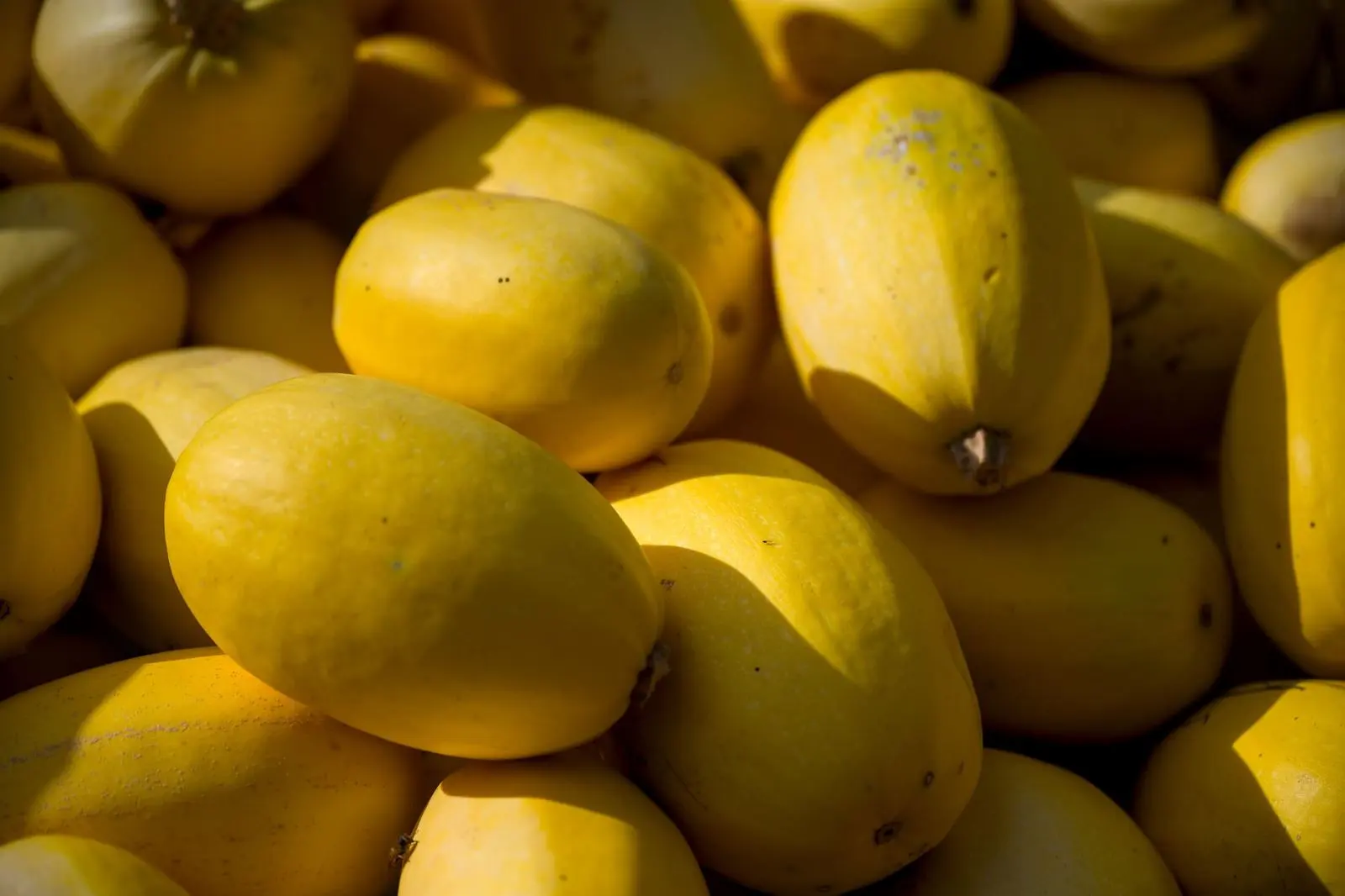
The Iowa State recipe places the halves cut side down in a baking dish and bakes them for 30 minutes. If a fork does not go in easily, it adds 10-15 minutes until tender. The URI guide sprinkles 1 teaspoon of olive oil over the cut halves before baking.
Cooking spaghetti squash in the microwave
MedlinePlus labels the microwave as the shortest cooking time. Place the halves cut side down on a microwave-safe dish with 1 to 2 tablespoons water, then cook on HIGH for about 12 minutes for a medium squash. Time varies with the size of the squash and the power of your microwave.
The URI guide steams the halves instead. It puts them cut side down in a microwave-safe dish with water, covers the dish with wax paper or plastic wrap, and cooks on HIGH for 10 minutes or until the sides give easily when squeezed.
Scraping, serving and storing leftovers
Let the squash rest for 10 minutes or until it is cool enough to handle. Then gently scrape the inside with a fork to make spaghetti-like strands. Refrigerate leftovers within 2 hours.
The sources suggest these ways to finish the strands:
- Seasoning: a little salt and pepper, or nutmeg, onion or garlic powder (MedlinePlus).
- Sauce and vegetables: pasta sauce, sautéed mushrooms, onions or other veggies, plus a sprinkling of cheese (MedlinePlus).
- Richer toppings: butter or oil with garlic powder and Parmesan (Iowa State), or cooked vegetables, feta and basil (URI).
- A one-dish meal: beans, tofu, cooked chicken or cooked meat (MedlinePlus).
The URI guide adds that cooked spaghetti squash can be frozen for later use.
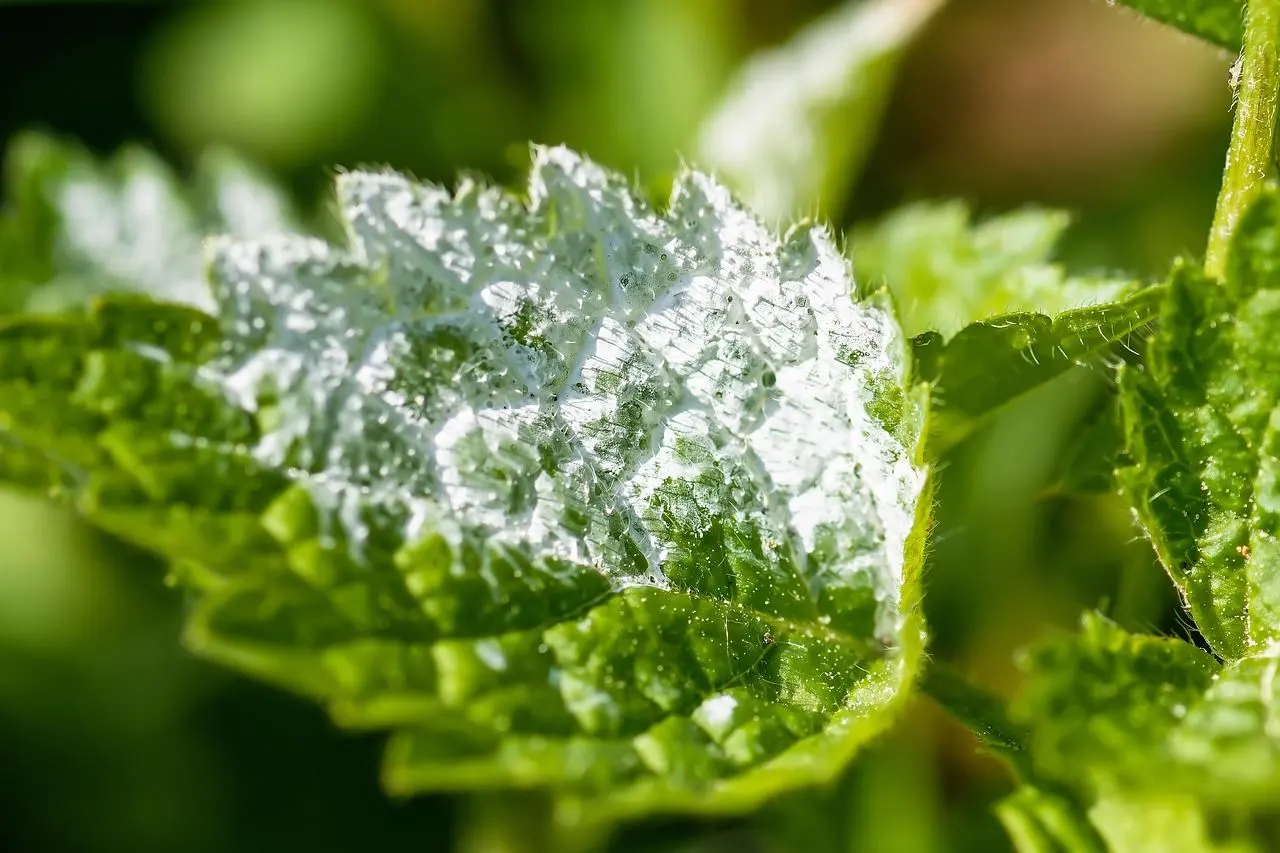
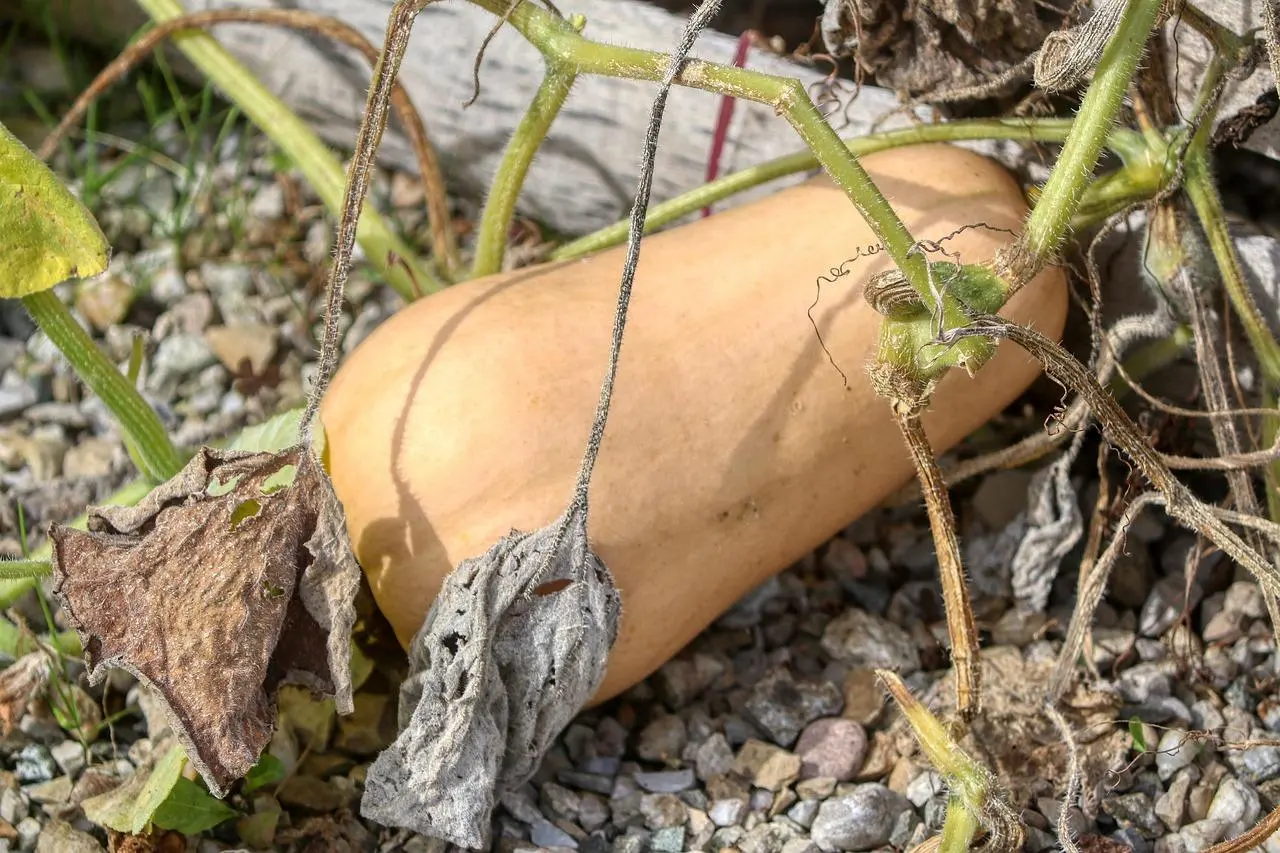
Another winter squash to compare is red kuri squash, which has its own page on this site. If you grow squash yourself, the page on powdery mildew on squash explains a leaf disease worth knowing about.
Frequently asked questions
Do I have to soften the squash before cutting it?
Show answer
No, it is a workaround for a shell that fights the knife. MedlinePlus presents a short warm-up as an option for tough squash, while the Iowa State recipe makes it a routine first step.
How can I tell when it is cooked?
Show answer
Push a fork into the shell. If it slides in without a struggle and the flesh pulls apart into strands, the squash is ready; otherwise give it more time in the oven or microwave.
Which method is quickest?
Show answer
The microwave, which the MedlinePlus recipe lists as its shortest option. Oven cooking takes longer, especially with a big squash or a lower temperature.
Can I keep cooked spaghetti squash for later?
Show answer
Yes. According to the URI guide, the cooked squash freezes well, and it also keeps in the fridge once cut and wrapped.